

Diversity, Equity and Inclusion
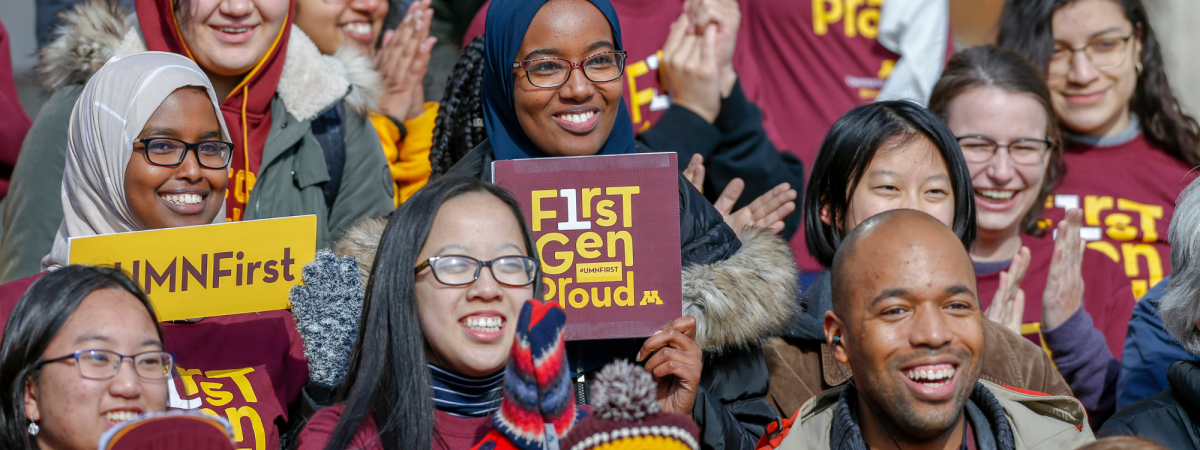
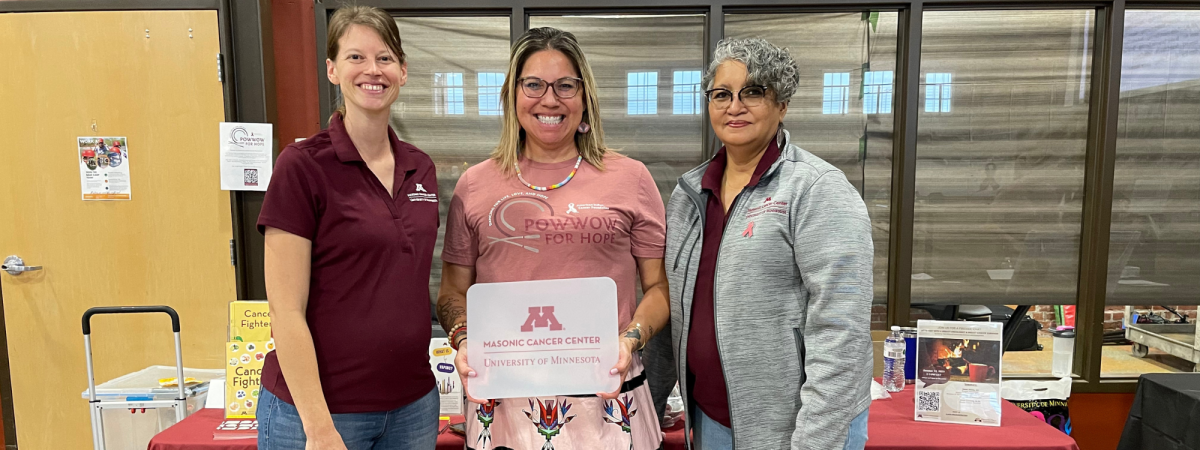
The Masonic Cancer Center (MCC) commits to Diversity, Equity, and Inclusion (DEI) in our mission to reduce the cancer burden in Minnesota and beyond.
Investing in DEI is an investment to excellence in our cancer center research that benefits all of us. We employ a DEI strategy that aims to attract people who are underserved and under-represented in science and medicine (URSM) to MCC with a long-range goal of equitable engagement of under-represented populations in the center. This work engages MCC leadership, membership, staff, and stakeholders to continuously work on inclusion and address equity in our structures, systems, environment, and actions. We aim to have the people in our center mirror national representation with reflection of the people across Minnesota.
“All of us do DEI work” - Dr. Rahel Ghebre
University-Tribal Healing and Land Aknowledgement
We acknowledge that the University of Minnesota is located on the traditional, ancestral, and contemporary lands of Indigenous people, the traditional homeland of the Dakota (dah-KO-tah) Nation and other Indigenous Peoples. We acknowledge that this land holds great historical, spiritual, and personal significance for its original stewards, the Native nations and peoples of this region. By offering this land acknowledgment, we affirm tribal sovereignty and will work to hold the University of Minnesota across the state accountable to American Indian peoples and nations. We recognize and continually support and advocate for the sovereignty of the Native nations in this territory and beyond, particularly listening and learning from native health communities. We recognize that land rights are determinants of health outcomes.
Towards Recognition and University-Tribal Healing—TRUTH—project “offers multiple recommendations on how the University of Minnesota community can be in better relation with Indigenous peoples” and is a set of resources and discussions. Please read, listen, and engage with this critical resource and effort.
To learn more, there are several resources, such as
- Center of American Indian and Minority Health (CAIMH)
- Native American Promise Tuition Program for undergraduate education
- Where We Stand: The University of Minnesota and Dakhóta Treaty Lands — a discussion on land acknowledgments by Čhaŋtémaza (Neil McKay) and Monica Siems McKay, published in Open Rivers
- Other UMN land acknowledgements: University of Minnesota Duluth, Institute for Advanced Study, University of Minnesota Crookston
About Us
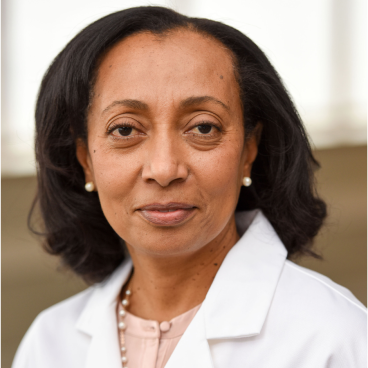
Rahel Ghebre, MD, MPH
Associate Director of Diversity, Equity, and Inclusion (DEI)
Professor, Division of Gynecologic Oncology, Department of Obstetrics, Gynecology and Women’s Health
Rahel Ghebre, MD, MPH leads the Plan to Enhance Diversity at the Masonic Cancer Center and overall efforts to leverage University of Minnesota and partner efforts to make strides in inclusive, equitable, and diverse representation in cancer careers. Dr. Ghebre reminds us that all of us do DEI work, which benefits our colleagues, patients, survivors, and communities.
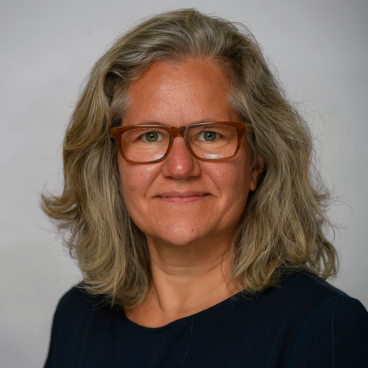
Heidi Eschenbacher, PhD
DEI Program Associate
Heidi Eschenbacher, PhD works with Dr. Ghebre and collaborators to plan, organize, connect, and contribute to DEI efforts at the Masonic Cancer Center. She also coordinates Training Navigation.

Daanis Chosa
American Indian and Alaska Native Training Navigator at the Center of American Indian and Minority Health (CAIMH) in partnership with the Masonic Cancer Center.
Daanis Chosa is from the Keweenaw Bay Indian (Chippewa) Community in Michigan and is an enrolled member of the Bois Forte Band of Chippewa in Minnesota. Daanis has worked in public health for over 10 years, starting with the Bois Forte Tribal Health and Human Services developing health and tobacco-related policies and pursuing racial equity within municipal government.. Daanis has focused her efforts on engaging and empowering tribal communities throughout Indian Country to implement policy, systems, and environmental change solutions that improve health outcomes for Indigenous people.
For more information about training navigation, please see the career development and training navigation page.
Please contact us at DEI-MCC@umn.edu
Internal Advisory Board
We have an internal advisory board for Community Engagement and Outreach (COE), Cancer Research Training and Education Coordination Core (CRTEC), and Diversity, Equity and Inclusion (DEI) efforts at MCC to inform priorities, track progress, and advance efforts. Please contact us (DEI-MCC@umn.edu) to collaborate and share ideas.
Our Approach
All of us have the capacity to contribute to our mission which is to reduce the cancer burden in our catchment area across Minnesota. Our approach is to engage in the science that advances cancer care outcomes and reduces persistent cancer health disparity in our community locally and nationally. We strive to have the people at the Masonic Cancer Center reflect the range of experiences and backgrounds of the people we serve. Our strategies, actions, pathways reflect our commitment to equity and justice as we work to enhance diversity at MCC.
DEI Aims
What's New
See upcoming MCC events, MCC equity news, and connect with us about training navigation.